
Exploring the importance of portfolio diversification, this introduction sets the stage for a deep dive into how diversifying investments can lead to optimal returns and risk management.
It covers the benefits of diversification, different asset classes involved, and strategies for effective portfolio management.
Importance of Portfolio Diversification
Portfolio diversification is a strategy that involves spreading your investments across different asset classes to reduce risk and maximize returns.
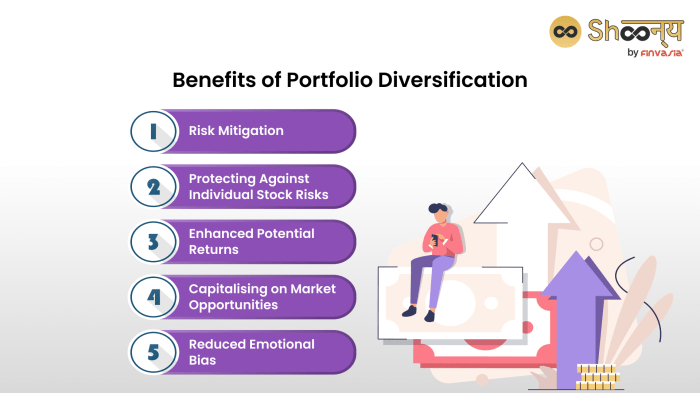
Benefits of Diversifying an Investment Portfolio
- Diversification helps to minimize the impact of market volatility on your overall portfolio.
- It can potentially increase your chances of achieving consistent returns over the long term.
- By investing in a variety of assets, you can lower the risk of losing all your capital in case one investment performs poorly.
How Portfolio Diversification Helps Manage Risk
- Through diversification, you can spread your investments across different industries, regions, and types of assets, reducing the impact of any single event on your portfolio.
- By incorporating assets with low correlation, you can offset losses in one investment with gains in another, balancing out the overall risk.
- It helps to protect your portfolio from unexpected market movements or economic conditions that may negatively affect a specific asset class.
Asset Classes in a Diversified Portfolio
Some common asset classes that can be part of a diversified portfolio include:
- Stocks: Ownership in a company that represents a share of its assets and earnings.
- Bonds: Debt securities issued by governments or corporations that pay interest over time.
- Real Estate: Property investments that can provide rental income and capital appreciation.
- Commodities: Physical goods like gold, oil, or agricultural products that can be traded.
Strategies for Portfolio Diversification
When it comes to diversifying your investment portfolio, there are several strategies that can help you manage risk and maximize returns. One of the key concepts in portfolio diversification is modern portfolio theory, which plays a crucial role in shaping investment decisions.
Modern Portfolio Theory and Diversification
Modern portfolio theory, developed by Harry Markowitz, emphasizes the importance of spreading investments across different asset classes to minimize risk. By diversifying your portfolio, you can reduce the impact of any single investment underperforming.
Examples of Diversification Strategies
- Asset Allocation: This strategy involves dividing your investments among different asset classes, such as stocks, bonds, and real estate, to achieve a balance of risk and return.
Importance of Rebalancing a Diversified Portfolio
Rebalancing involves periodically adjusting your portfolio to maintain the desired asset allocation. This ensures that your portfolio remains aligned with your investment goals and risk tolerance, especially as market conditions change.
Role of Risk Tolerance in Diversification Strategies
Your risk tolerance, or willingness to accept risk, plays a crucial role in determining your diversification strategy. Understanding your risk tolerance helps you build a portfolio that matches your financial goals and comfort level with market fluctuations.
Portfolio Management
Portfolio management is a crucial aspect of investment that involves making decisions about investment mix and policy, matching investments to objectives, asset allocation for individuals and institutions, and balancing risk against performance.
Key Principles of Effective Portfolio Management
Effective portfolio management is based on several key principles that guide investors in achieving their financial goals. These principles include:
- Diversification: Spreading investments across different asset classes to reduce risk.
- Asset Allocation: Allocating investments among different asset classes based on goals, risk tolerance, and time horizon.
- Risk Management: Monitoring and managing risk to ensure a balanced portfolio.
- Regular Review: Periodically reviewing and adjusting the portfolio to align with changing financial goals and market conditions.
Constructing a Well-Balanced Portfolio
Constructing a well-balanced portfolio involves a systematic approach to asset allocation, diversification, and risk management. The process includes:
- Setting Investment Objectives: Defining financial goals, risk tolerance, and time horizon.
- Asset Allocation: Determining the optimal mix of asset classes based on objectives and risk profile.
- Diversification: Spreading investments across different sectors, industries, and geographies to reduce risk.
- Risk Management: Implementing strategies to mitigate risk and protect the portfolio against market volatility.
Role of a Portfolio Manager
A portfolio manager plays a critical role in overseeing investments on behalf of clients. Their responsibilities include:
- Developing Investment Strategies: Creating investment strategies aligned with client goals and risk tolerance.
- Asset Selection: Identifying and selecting specific investments that fit the portfolio’s objectives.
- Monitoring Performance: Regularly evaluating the portfolio’s performance and making adjustments as needed.
- Risk Management: Implementing risk management techniques to protect the portfolio against potential losses.
In conclusion, understanding the significance of portfolio diversification is key to achieving financial goals and mitigating risks. Diversifying wisely is the cornerstone of successful investment strategies.
Questions and Answers
What is the main benefit of portfolio diversification?
Diversification helps spread risk across different investments, reducing the impact of any single asset’s performance on the overall portfolio.
How does risk tolerance play a role in diversification strategies?
Risk tolerance influences the mix of assets in a portfolio, with risk-averse investors opting for more stable investments while those with higher risk tolerance may include more volatile assets.
What are some key principles of effective portfolio management?
Key principles include asset allocation, diversification, regular monitoring, and rebalancing to maintain desired risk levels and investment objectives.


