
Embark on a journey through the realm of stock market diversification, exploring how strategic investments can enhance portfolio returns and minimize risks.
Discover the key concepts, benefits, and strategies that can empower investors to navigate the complex landscape of diversification with confidence.
Diversification in Stock Market
Diversification in the stock market refers to the practice of spreading investments across different assets to reduce risk. This strategy involves investing in a variety of securities, industries, and asset classes to minimize the impact of any single investment’s performance on the overall portfolio.
Reducing Risk through Diversification
Diversification can reduce risk in stock market investments by spreading exposure across various assets. For example, if one company in the portfolio underperforms or faces financial difficulties, the impact on the overall portfolio is minimized due to investments in other companies that may perform well during the same period.
Benefits of Diversifying a Stock Portfolio
Risk Management
Diversification helps manage risk by reducing the impact of any single investment on the portfolio.
Stability
A diversified portfolio is less susceptible to market fluctuations as losses in one asset may be offset by gains in another.
Potential for Growth
By investing in different sectors and industries, you have the opportunity to benefit from the growth of various markets.
Strategies for Effective Diversification
- Asset Allocation: Allocate investments across different asset classes such as stocks, bonds, and real estate.
- Sector Diversification: Invest in companies from various sectors to reduce sector-specific risks.
- International Diversification: Consider investing in companies from different countries to spread geopolitical and currency risks.
- Rebalancing: Regularly review and adjust your portfolio to maintain the desired diversification level.
Importance of Portfolio Diversification
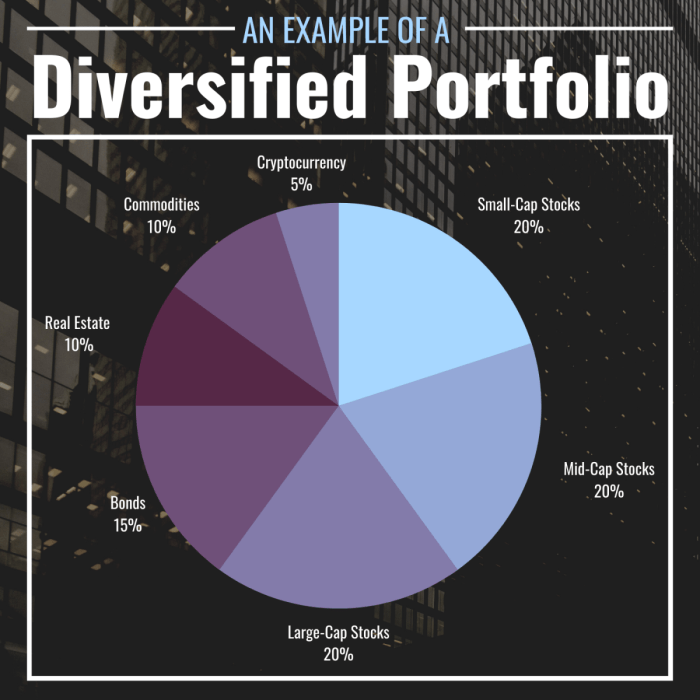
Diversification is a crucial strategy for investors to minimize risk and optimize returns in their investment portfolios. By spreading investments across different asset classes, industries, and regions, investors can reduce the impact of volatility in any single investment on the overall portfolio performance.
Risks Associated with Lack of Diversification
- Concentration Risk: When a portfolio is heavily concentrated in a single asset or sector, it becomes highly susceptible to adverse events specific to that asset or sector.
- Market Risk: Failure to diversify exposes the portfolio to broader market risks, such as economic downturns or industry-wide disruptions that can negatively impact all investments.
- Liquidity Risk: Lack of diversification can lead to difficulties in selling assets quickly at fair prices, especially during market turmoil.
Benefits of Diversification for Long-Term Financial Goals
- Steady Returns: Diversification helps smooth out investment returns over time by mitigating the impact of underperforming assets with the positive performance of others.
- Risk Management: By spreading investments, investors can reduce the overall risk exposure of their portfolio, making it more resilient to market fluctuations.
- Capital Preservation: Diversification can help protect capital by limiting the potential losses from any single investment, thus safeguarding long-term financial goals.
Real-Life Scenarios of Lack of Diversification
- Example 1: A tech-focused investor who only invested in a single tech company faced significant losses when the industry experienced a downturn, highlighting the dangers of lack of diversification.
- Example 2: During the financial crisis of 2008, investors heavily concentrated in real estate investments suffered massive losses, emphasizing the importance of diversifying across asset classes.
Types of Diversification Strategies
Diversification in the stock market can be achieved through various strategies, each offering its own unique benefits and considerations.
Asset Allocation
Asset allocation involves spreading investments across different asset classes such as stocks, bonds, and cash equivalents. This strategy aims to reduce risk by not putting all eggs in one basket.
Sector Rotation
Sector rotation focuses on investing in different sectors of the economy based on market cycles. By rotating investments between sectors like technology, healthcare, and energy, investors aim to capitalize on sector-specific trends.
Geographic Diversification
Geographic diversification involves investing in securities from different regions or countries to spread risk geographically. This strategy helps mitigate the impact of localized economic events on the portfolio.
Correlation plays a crucial role in diversification strategies as it measures the relationship between different investments. A correlation coefficient of +1 indicates a perfect positive correlation, while -1 represents a perfect negative correlation. Diversifying assets with low or negative correlations can help balance risk in a portfolio.
Balancing Risk and Return
Investors can use diversification to balance risk and return in their portfolios by combining assets with different risk levels. While higher-risk investments offer the potential for greater returns, lower-risk assets provide stability during market downturns.
Minimizing Volatility
Diversification plays a key role in minimizing volatility in stock market investments. By spreading investments across various assets, sectors, and regions, investors can reduce the impact of market fluctuations on their overall portfolio value.
In conclusion, embracing diversification in the stock market offers a pathway to financial resilience and stability, allowing investors to weather uncertainties and capitalize on opportunities with a well-balanced portfolio.
Frequently Asked Questions
Why is diversification important in the stock market?
Diversification helps spread risk across various investments, reducing the impact of any single asset’s performance on the overall portfolio.
What are some common diversification strategies?
Asset allocation, sector rotation, and geographic diversification are popular strategies used to diversify a stock portfolio effectively.
How does diversification help in achieving long-term financial goals?
By diversifying investments, investors can protect against market volatility and position themselves for sustainable growth over time.


